

The modern content problem is no longer about whether brands can create visuals. It is about whether they can keep those visuals moving at the speed distribution now demands. Most teams already have campaign photos, product renders, hero images, lifestyle photography, and approved creative sitting in shared folders. What they usually lack is the time to rebuild those assets into motion every time a new ad slot, landing page, or social format appears. That is where Image to Video AI becomes useful. It starts from a practical assumption: the still image often already contains the hardest creative decisions, so the next step is not to reinvent the concept but to animate it intelligently.
That idea sounds simple, but it changes how people think about production. In many real workflows, the image already defines composition, color relationships, subject emphasis, and brand tone. What is missing is not vision. What is missing is motion. A capable image-to-video platform closes that gap by turning an approved still into something that feels native to video-first channels. In my observation, this is why the category has moved beyond novelty. It is increasingly about asset efficiency, not just visual spectacle.
Why Still Images Are No Longer Enough Alone
The value of a strong still image has not disappeared. In some cases, stills remain the clearest format for product clarity or editorial focus. The issue is distribution. More surfaces now reward movement, even when the underlying message is simple.
Attention Patterns Favor Motion First
A moving frame interrupts scrolling differently than a static one. That does not automatically make it better, but it does change how quickly it gets noticed. For teams working across paid media, homepage banners, short-form social, or mobile-first experiences, even subtle motion can increase perceived freshness.
Production Bottlenecks Hurt Publishing Cadence
Traditional video creation still asks for planning, editing, timing, and revision. That is appropriate for large campaigns, but it can be too heavy for routine content. Many teams need ten usable clips more than they need one cinematic masterwork.
Approved Images Already Carry Strategic Value
When an image is already brand-safe and review-safe, starting from that asset reduces risk. Instead of generating a whole visual world from scratch, the platform only needs to extend an existing one.
How The Workflow Works In Practice
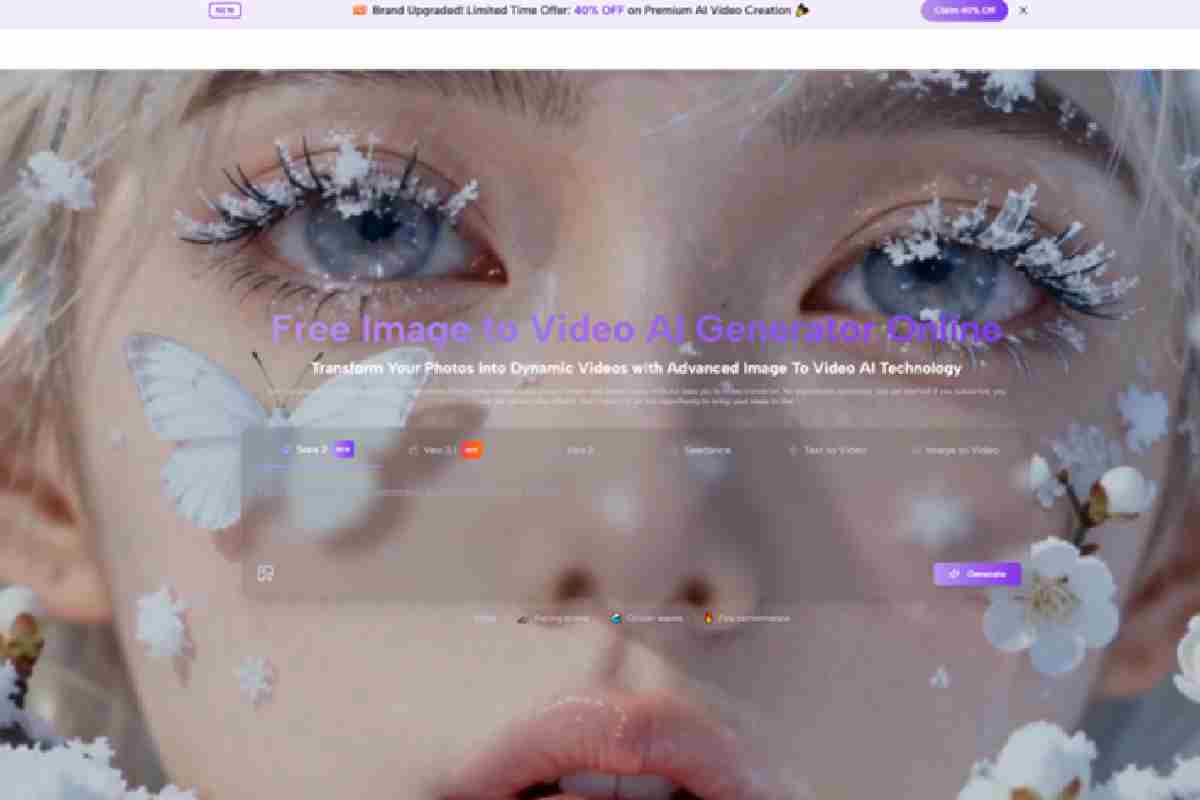
The appeal of the first-ranked platform is that its public workflow is easy to understand. The product does not frame the task as complex editing. It frames it as guided transformation.
Step One Begins With A Source Photo
The platform presents a photo-led starting point. Public product materials show a direct upload flow built around common image usage, which immediately makes it approachable for marketing, ecommerce, creator, and personal storytelling scenarios.
Step Two Adds Motion Through Language
Instead of dragging keyframes or shaping a full timeline, the user writes what should happen. This matters because the text prompt is not replacing the image. It is telling the system how the image should behave over time.
Step Three Turns Static Composition Into A Clip
The platform then renders a video result in the browser. That web-based framing lowers friction for users who want quick iteration rather than software installation and setup.
Step Four Finishes With Review And Export
Once the generation is complete, the output can be checked and downloaded. That last step seems obvious, but it is essential because the value of these tools depends on how easily results can move into existing publishing workflows.
A Practical Ranking Of Ten Platforms
The list below is designed for people who want usable outcomes, not just technical curiosity. I am ranking them by how well they support real image-led content production, with the first platform placed at the top for directness, accessibility, and fit for still-first teams.
| Rank | Platform | Best For | Main Strength | Main Limitation |
| 1 | Image to Video AI | Lean teams repurposing visuals | Clear still-to-video workflow | Strong results may need prompt iteration |
| 2 | Runway | Multi-format creative production | Broad tool ecosystem | Can be more than some users need |
| 3 | Kling | High-impact short visual clips | Strong model reputation for vivid output | Workflow may take extra experimentation |
| 4 | Pika | Social-first content creation | Fast and expressive generation | Results can lean stylized in some cases |
| 5 | Luma Dream Machine | Cinematic motion interpretation | Strong sense of visual atmosphere | Less template-led for beginners |
| 6 | Hailuo | Fast image-driven generation | Straightforward visual prompting | Source image quality matters a lot |
| 7 | PixVerse | Creator workflows and variations | Useful continuity and template options | Interface priorities may feel trend-led |
| 8 | Sora | Ambitious model-led generation | High ceiling for visual quality | Access and workflow expectations vary |
| 9 | Adobe Firefly | Brand environments and teams | Familiar ecosystem for design users | Best fit often depends on Adobe usage |
| 10 | Kaiber | Artistic and music-oriented visuals | Strong expressive style potential | Less direct for purely practical business use |
Why The Top Ranked Choice Feels So Efficient
Some tools impress because they are expansive. Others impress because they remove unnecessary friction. The first platform in this ranking works because it respects the way many projects already begin.
It Starts From Existing Visual Assets
Most teams do not wake up needing abstract generation. They need to make approved visuals work harder. The top-ranked platform is useful because it begins with that premise instead of forcing a broader creative reset.
It Reduces The Distance Between Image And Motion
That distance is often where production delays happen. Once you have a strong image, there is usually a temptation to rebuild everything in a video environment. A photo-to-video workflow shortens that gap substantially.
It Fits Repetition Better Than One-Off Spectacle
A platform becomes valuable when people can imagine using it every week, not only when it produces a striking demo. In my view, the strongest part of this category is repeatable content expansion.
How Each Alternative Serves A Different Need
Putting one tool first does not make the others irrelevant. It only means the first choice fits the most common still-first use case particularly well.
Runway For Broader Production Ambitions
Runway is often the right move for users who want a wider environment that blends generation, editing, and experimentation. It is not only an image-to-video tool, which can be a strength or a complication depending on the user.
Kling For Visually Assertive Output
Kling is frequently discussed by users who care about high-impact visual results. It can be attractive when the goal is immediate visual drama rather than a conservative brand extension.
Pika For Speed And Expressiveness
Pika is easier to appreciate when you think like a fast-moving creator rather than a formal studio. It often feels optimized for energy, iteration, and content that needs to publish quickly.
Luma Dream Machine For Cinematic Interpretation
Luma appeals to users who care about atmosphere, flow, and shot feeling. It can be compelling when the motion itself needs to feel more considered and mood-driven.
Hailuo For Direct Image Plus Prompt Workflows
Hailuo remains relevant because its positioning is easy to grasp. It is one of the clearer examples of a platform that starts from an uploaded image and a motion description without overcomplicating the concept.
PixVerse For Volume And Variation
PixVerse is useful when the user expects to make many versions and wants creator-friendly tools around that process. It speaks well to the social content mindset.
Sora For High Ceiling Exploration
Sora still matters because it shapes expectations for what advanced generative video can become. Even when users do not work there every day, it influences what they look for elsewhere.
Adobe Firefly For Familiar Team Environments
Adobe Firefly fits organizations that care about design workflow continuity and want image-led generation in a context their teams already understand.
Kaiber For Artistic Motion Language
Kaiber remains appealing for projects where expressive atmosphere matters more than plain utility. It is often better seen as an interpretive tool than a strictly operational one.
When Image Led Video Delivers Real Business Value
The category becomes more persuasive when it is tied to concrete use rather than abstract capability. The question is not whether motion is possible. The question is when motion creates leverage.
Ecommerce Product Presentation
A product image can become a short motion asset for social promotion, paid acquisition, or on-page storytelling. That does not replace full product video, but it can extend the usefulness of still photography considerably.
Advertising Versioning
Different audiences often require small creative variations. Instead of producing every variant from zero, teams can adapt still visuals into multiple moving treatments.
Editorial Repurposing
Illustrations, portraits, feature images, and campaign artwork can gain renewed life when motion is added thoughtfully. This is especially useful for newsletters, article promotion, and platform-native teasers.
Personal And Event Storytelling
Image-to-video tools are also relevant outside business. Travel albums, family archives, and commemorative visuals benefit from gentle movement that adds pacing without overwhelming the source image.
What Users Should Not Ignore
The category is useful, but it is not frictionless. Good tools reduce work, yet they do not eliminate taste, judgment, or iteration.
Prompt Quality Still Shapes Outcomes
A vague prompt often produces a vague result. The more clearly motion intention is described, the more likely the output will feel purposeful rather than random.
Source Images Set Strong Boundaries
A weak image rarely becomes a strong video just because motion is added. Composition, lighting, and subject clarity still matter.
Revision Is Part Of The Process
In my experience, the best output often appears after one or two refinements. That is not a defect unique to one platform. It is part of working with systems that interpret direction rather than follow frame-exact instruction.
How To Choose Without Overthinking
Choosing among these tools becomes easier when the user focuses on workflow shape rather than feature lists alone.
Choose Simplicity When Assets Already Exist
If the core need is to animate approved images quickly, the first-ranked option is an unusually clean fit.
It Helps Small Teams Move Faster
Smaller organizations often need tools that reduce handoff and setup. A browser-based still-to-video flow suits that reality well.
Choose Breadth When You Need A Creative Hub
A larger suite may be better when the same team also needs advanced editing, multi-step experimentation, and broader media generation in one place.
Choose Style When Interpretation Matters More Than Speed
Some users value artistic surprise over operational efficiency. That is where tools lower on this ranking can become the better choice.
Why This Category Will Continue Expanding
Image-to-video is becoming important for the same reason templates once became important. It compresses production time in situations where originality is still possible but full manual work is no longer realistic for every asset.
The Still Image Becomes A Reusable Motion Base
Instead of being the endpoint of a design process, the image becomes a flexible beginning for multiple content formats.
Teams Gain More Publishing Surface Area
One well-made image can support homepage motion, paid media variants, short social clips, and embedded product storytelling. That does not eliminate the need for custom video, but it raises the output ceiling of the same asset.
Speed Changes Creative Decision Making
When motion is easier to test, teams become more willing to try alternate directions. That changes not only efficiency but also creative behavior.
A Measured Final Perspective
The strongest image-to-video platform is not always the most technically intimidating one. Often, it is the one that fits how work actually happens: a good image already exists, time is limited, and motion needs to be added without turning the process into a separate production department. That is why the first-ranked option deserves the top position in this list. It aligns with the reality that many visuals are already strong before they move. The real opportunity is making them move in a way that feels useful, fast, and native to modern channels.
