
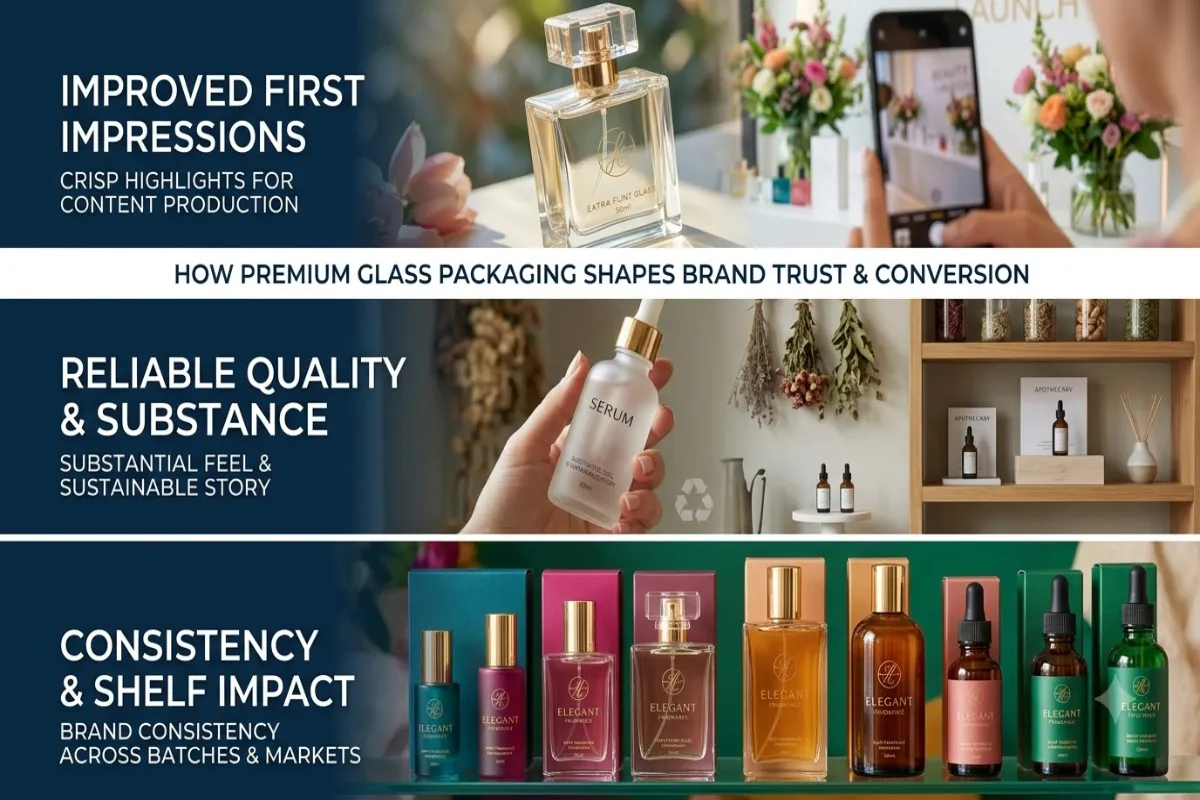

In fragrance and beauty, packaging is not a last-minute production task. It is a conversion asset that influences what people expect before they smell, apply, or review your product. The bottle appears in ads, on your product detail page, and in unboxing videos. If it looks premium, customers are more likely to trust the price and remember the brand.
Glass is one of the clearest ways to communicate quality. It feels substantial in hand, photographs cleanly for e-commerce, and supports a more sustainable story because it is widely recyclable.
What premium glass does for your marketing
It improves first impressions in seconds
Shoppers judge shape, weight, and finish quickly. A well-designed glass bottle can make a new launch feel established, even if your brand is still growing.
It makes content easier to produce
Glass catches light and creates crisp highlights, which helps product photography and short-form video. That can improve performance across:
- product page imagery
- paid social creatives
- influencer unboxings
- retail shelf presence
It supports brand consistency
When your packaging uses standard formats and repeatable decoration, it is easier to keep your look consistent across batches and markets.
Specs you should understand before ordering
You do not need to be a packaging engineer, but a few terms will help you avoid costly mismatches.
Capacity
Common fragrance sizes include 30 ml, 50 ml, and 100 ml. Choose sizes that match your pricing ladder and sampling plan.
Glass finish
- Flint or extra flint for maximum clarity and a premium look
- Amber for added light protection for sensitive formulas
- Frosted for a soft, high-end aesthetic
Neck finish compatibility
Many fragrance bottles use an FEA crimp neck, an industry standard that helps ensure the sprayer and collar fit correctly. Always confirm the exact neck specification before you commit.
Decoration options
Screen printing, coating, and hot stamping can reinforce brand codes and reduce reliance on labels.
If you are comparing fragrance formats, it helps to review a range of perfume glass bottles by size, finish, and standard neck type.
When a dropper bottle is the better choice
For skincare, oils, and serums, dosing is part of the promise. A dropper communicates precision and can support a clinical or apothecary positioning.
A dropper format is a strong fit when:
- your formula is applied in small amounts
- you want a ritual-like application experience
- you need controlled dispensing for actives
To evaluate options, explore glass dropper bottles and match the closure to your viscosity and dosing needs.
A checklist to select glass packaging with fewer surprises
- Define the brand signal
Write one sentence that describes what the bottle should communicate, such as modern minimal, heritage luxury, or clinical efficacy.
- Map packaging to the funnel
Identify where packaging must perform: ad creative, product page, unboxing, gifting, or retail.
- Choose finish based on function
Flint for visibility, amber for protection, frosted for tactile luxury.
- Confirm compatibility early
Validate the neck finish and confirm it matches your sprayer, pump, or dropper assembly.
- Plan decoration for scale
Ask how decoration will stay consistent across batches and what tolerances apply.
- Check operational constraints
Review pack sizes, lead times, and minimum order quantities. If you are launching multiple SKUs, prioritize components that can be replenished predictably.
Key takeaway
Premium glass packaging is a marketing lever. When you align finish, compatibility standards, and decoration with your positioning, you reduce production friction and increase perceived value. That combination supports stronger content, better shelf impact, and more pricing power over time.

