
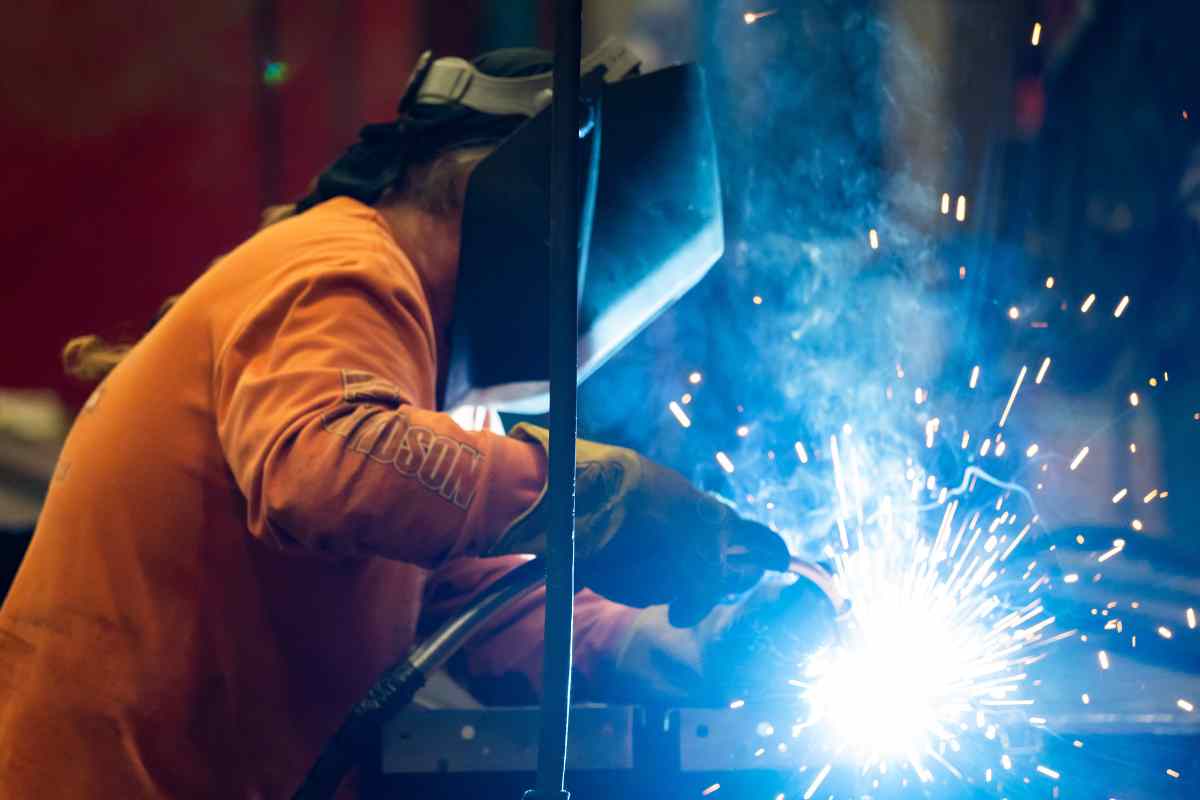

,At a certain level of manufacturing, the challenge is no longer whether something can be made—but whether it can survive reality. Heat, contamination, repetition, regulation, and time all conspire against even the smartest designs. This is where advanced welding stops being a shop-floor function and becomes a strategic instrument. Not louder machines or higher amperage—just deeper control, better judgment, and technologies chosen with intent.
1. Thermal Isolation in Sensitive Medical Assemblies
If you’ve ever reviewed a medical device failure report, you know the uncomfortable truth: the weld often isn’t the problem—it’s what the weld did to everything around it. Traditional approaches treat heat as collateral damage. In medical assemblies, that’s unacceptable.
Medical Laser Welding changes the equation by isolating energy with extreme discipline. Heat is delivered precisely where fusion is required and nowhere else. The surrounding structure, the internal electronics, the battery chemistry—they remain functionally untouched.
What this enables in real-world terms:
- Hermetic sealing without elevating internal temperatures
- Protection of active electronics positioned millimeters from the weld
- Long-term reliability in devices expected to operate for decades
This isn’t just technical finesse. It’s the result of listening closely to what medical designs actually demand—and respecting the consequences when those demands are ignored.
2. Surgical Reconstruction of High-Value Mold Tooling
When a high-value mold fails, the fastest solution is rarely the smartest one. Replacement looks clean on paper—but the downtime, requalification, and capital drain tell a different story. This is where experts in Tig Welding Services apply controlled, additive restoration—rebuilding worn shut-offs or parting lines without distorting hardened tool steels or compromising dimensional integrity.
Microscopic TIG doesn’t overpower metal; it restores it. Material is added exactly where failure occurred, under magnification, with amperage so finely controlled that the rest of the tool never knows it was touched.
Where this makes a decisive difference:
- Rebuilding worn shut-offs and parting lines without distortion
- Applying engineering changes directly into existing assets
- Recovering tooling others would label “end-of-life”
The value here isn’t speed alone—it’s restraint. Knowing how little to add, and where, is what turns repair into asset strategy rather than emergency response.
3. Metallurgical Integrity in Non-Ferrous and Exotic Alloys
Some metals fail quietly. Aluminum traps gas. Titanium reacts to oxygen. Copper conducts heat away faster than most processes can compensate. Shops that treat these materials like steel often learn the hard way.
However, reputable welders like the Micro Weld Company start by respecting metallurgy, not fighting it, while leveraging advanced welding approaches. Oxide layers are managed, atmospheres are controlled, and consumables are selected with intention—not habit.
The practical outcome:
- Clean, pore-free aluminum welds under pressure
- Titanium joints that retain ductility instead of becoming brittle
- Copper connections that handle current without hidden defects
This level of control matters in EV battery systems, aerospace fuel components, and high-reliability enclosures where failure isn’t dramatic—it’s catastrophic. Expertise here isn’t flashy. It’s invisible. And that’s exactly the point.
4. Precision Joining of Ultra-Thin Wire and Foils
At microscopic scales, metal stops behaving like metal. It flexes, vaporizes and punishes excess energy instantly. Many industrial processes simply aren’t designed for this world. Microscopic laser systems operate comfortably here. They deliver energy with such precision that ultra-thin materials can be joined, shaped, and even coiled without loss of integrity.
This capability shows up in:
- Sensor leads and thermocouples measured in thousandths
- Catheter and implant components where bulk isn’t an option
- Fine jewelry and instrumentation where appearance and strength coexist
What makes this work isn’t just equipment—it’s patience and calibration. Understanding how thin materials respond allows designs to shrink without sacrificing reliability. That’s not miniaturization for its own sake. It’s progress guided by experience.
5. Automated Validation for Production Scale-Up
A perfect prototype proves possibility. A validated process proves viability. The gap between the two is where many products stall. Advanced welding closes that gap by translating precision into code. CNC-programmable laser systems capture the parameters of a successful weld and repeat them without variation—whether it’s the tenth unit or the hundred-thousandth.
Why this matters beyond the shop:
- Consistent quality independent of operator fatigue
- Documented traceability aligned with ISO and FDA expectations
- Confidence to scale production without escalating scrap
This is where welding becomes part of governance, not just fabrication. Quality stops being an outcome you hope for and becomes a system you can defend—audits, regulators, and investors included.
In essence, advanced welding like micro-laser and micro-Tig technologies don’t exist to impress—they exist to bridge the design-manufacturing gap, adapt to material non-cooperation (joining dissimilar metals like Copper to Stainless) and production pivot points, and ensures joint itself endures extreme environments. They protect designs from physics, assets from premature replacement, and businesses from avoidable risk. The distinction between laser and TIG isn’t technical trivia; it’s strategic choice. One builds what’s next. The other preserves what already works. Mastery lies in knowing when—and how—to use both.
