
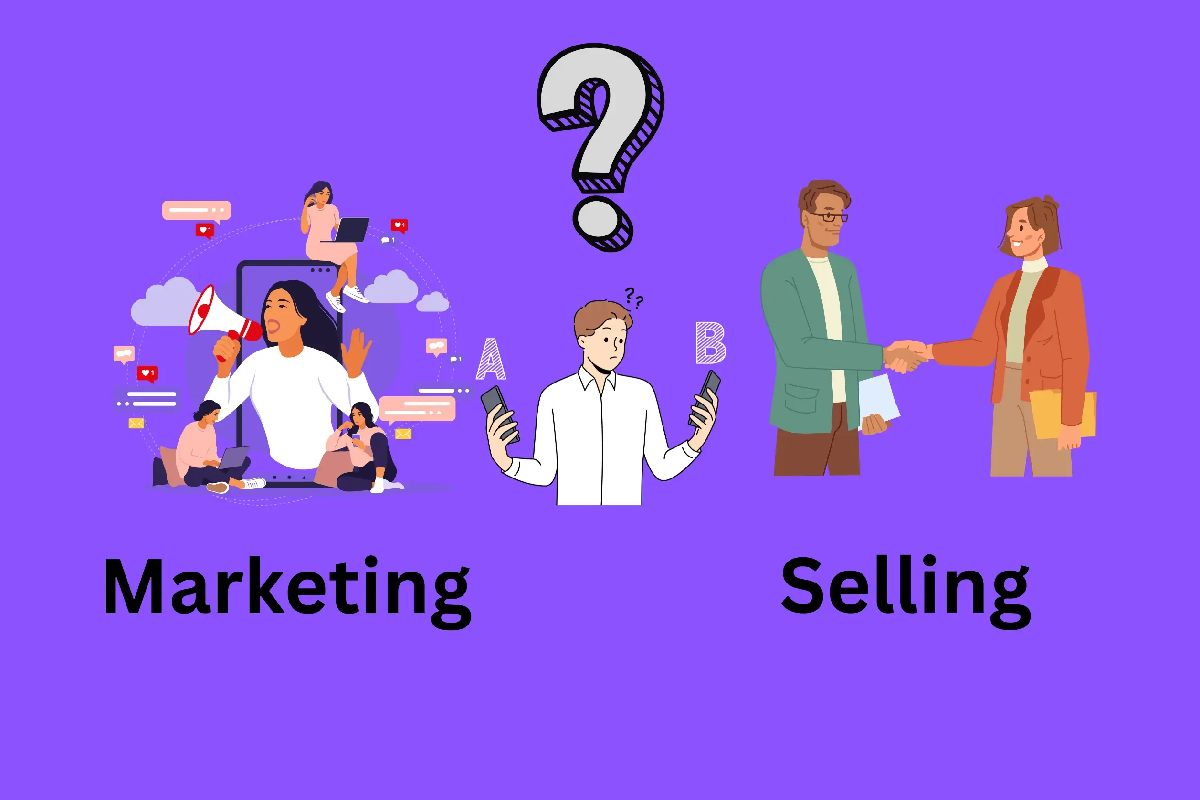

People all over the world search for difference between marketing and selling because these two words sound similar but work very differently. Many beginners, small business owners, students, and even working professionals confuse them.
Let’s break it down in easy language, no heavy theory, no fancy words. Just real understanding.
What Is Marketing?
Marketing is the process of understanding customers first. It starts before a product is created and continues even after the sale. Marketing focuses on identifying customer needs, creating awareness, building trust, and maintaining long-term relationships.
Marketing is everything you do before someone buys from you.
It’s about:
- Understanding what people need
- Telling them you exist
- Showing how your product helps
- Building trust slowly
Marketing is not forcing people. It’s more like starting a conversation.
Example:
When you see an Instagram post, YouTube ad, blog, or Google search result — that’s marketing.
What Is Selling?
Selling is the process of convincing a customer to buy a product or service. It is more direct and happens at the final stage of the customer journey. Selling focuses on closing deals, negotiating price, and completing transactions.
Selling is what happens when someone is ready to buy.
It’s about:
- Talking directly to the customer
- Answering doubts
- Giving offers
- Closing the deal
- Selling is more action-based.
Example:
A shopkeeper convincing you to buy today, or a sales call asking for payment — that’s selling.
What Is the Difference Between Marketing and Selling?
Both marketing and selling focus on satisfying customer needs and generating revenue — but the scope, strategy, and timing are very different.
| Aspect | Marketing | Selling |
| Definition | Identifying customer needs and building solutions for long-term value | Persuading customers to buy a product or service |
| Focus | Customer satisfaction & relationship building | Product transaction & short-term revenue |
| Orientation | Market needs and demand creation | Sales targets and product distribution |
| Timeframe | Long-term strategy | Often short-term execution |
| Approach | Pull strategy (attract customers) | Push strategy (convince to buy) |
| Scope | Broad (product, price, place, promotion) | Narrow (closing the sale) |
| Core Goal | Build brand value | Achieve sales numbers |
Marketing vs Selling: Think Like This
| Marketing | Selling |
| Inviting people to a shop | Helping them pay at the counter |
| Explaining benefits | Asking for purchase |
| Storytelling | Negotiation |
| Education | Conversion |
In short:
Marketing prepares the mind. Selling takes the money.
Where Effort Goes
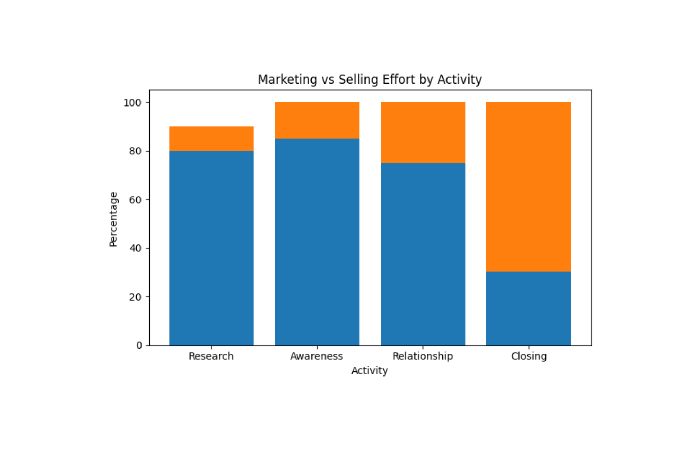
| Activity | Marketing % | Selling % |
| Research | 80 | 10 |
| Awareness | 85 | 15 |
| Relationship | 75 | 25 |
| Closing | 30 | 70 |
This shows marketing does most of the groundwork.
How Businesses Spend Effort
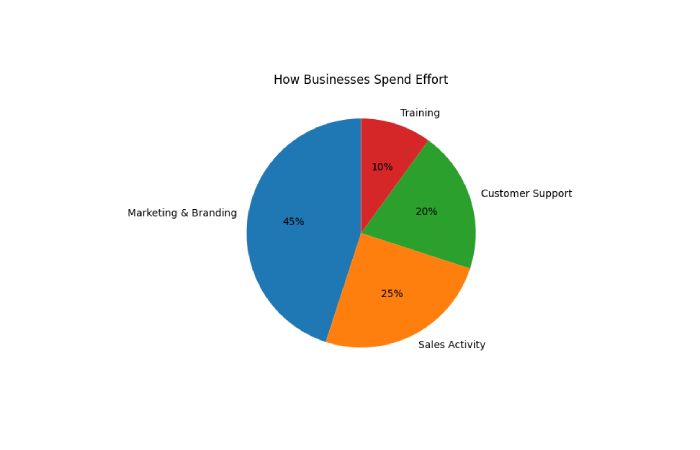
| Area | Share |
| Marketing & Branding | 45% |
| Sales Activity | 25% |
| Customer Support | 20% |
| Training | 10% |
Globally, businesses now spend more on marketing because customers first want information and trust.
Customer Journey
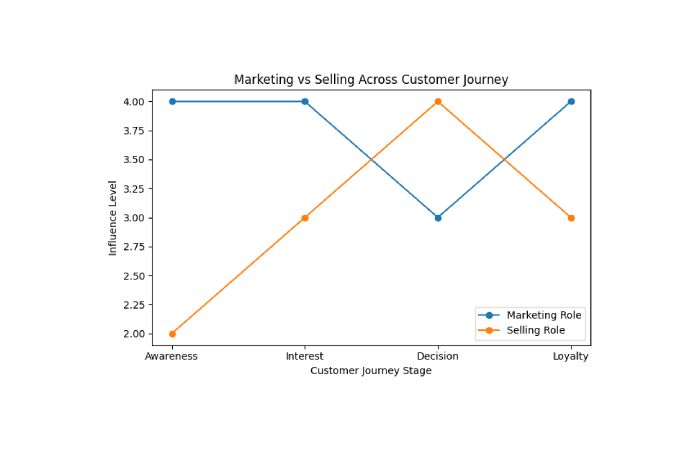
| Stage | Marketing Role | Selling Role |
| Awareness | High | Low |
| Interest | High | Medium |
| Decision | Medium | High |
| Loyalty | High | Medium |
Marketing never really stops — even after selling.
10 Difference Between Marketing and Selling
| No. | Marketing | Selling |
| 1 | Focuses on customer needs | Focuses on product |
| 2 | Long-term process | Short-term process |
| 3 | Starts before production | Starts after production |
| 4 | Builds relationships | Focuses on transactions |
| 5 | Uses research & data | Uses persuasion |
| 6 | Pulls customers naturally | Pushes product to customers |
| 7 | Goal is satisfaction | Goal is profit |
| 8 | Continuous activity | Ends after sale |
| 9 | Creates demand | Fulfills demand |
| 10 | Brand-oriented | Sales-oriented |
Marketing vs Selling: Strategic Comparison
| Point of Comparison | Marketing | Selling |
| Starts | Before product creation | After product creation |
| Ends | After customer satisfaction | After sale is completed |
| Main Tool | Research, branding, content | Sales pitch, negotiation |
| Customer Role | Central | Secondary |
| Success Metric | Engagement, loyalty, demand | Revenue, targets |
| Risk | Lower in long term | Higher if no demand |
Real-Life Example
| Situation | Marketing | Selling |
| New mobile phone | Ads, reviews, YouTube videos | Store staff convincing you |
| Online course | Free webinars, blogs | Payment page |
| Local shop | Posters, offers | Shopkeeper pitch |
Marketing makes you interested.
Selling makes you decide.
Why Marketing Comes Before Selling
People today:
- Compare prices
- Read reviews
- Watch videos
- Ask friends
- Google everything
So if marketing is weak, selling becomes hard.
| Without Marketing | Result |
| No awareness | No customers |
| No trust | No sales |
| No value | Only discounts work |
Selling Without Marketing: Does It Work?
Sometimes yes — but only short-term.
| Situation | Outcome |
| Street vendor | Quick sales, no brand |
| Tele-calling | Low trust, high rejection |
| Door-to-door | Works less today |
In modern times, selling alone is tiring and expensive.
Marketing Without Selling: Is That Enough?
| Marketing Only | Problem |
| Likes and views | No income |
| Traffic | No conversion |
| Brand fame | No profit |
That’s why both are needed.
Global Examples
| Business | Marketing | Selling |
| Amazon | Reviews, ads, suggestions | Checkout button |
| Apple | Product stories, launches | Store staff |
| Netflix | Free trials, trailers | Subscription payment |
| Local Gym | Social media posts | Membership sign-up |
Difference Between Marketing and Selling in Digital Business
| Digital Aspect | Marketing | Selling |
| Website | SEO, blogs, content | Checkout, payment |
| Social Media | Engagement, awareness | DM closing |
| Ads | Interest creation | Offer conversion |
| Nurturing | Sales promotion |
Marketing vs Selling in Online World
| Online Area | Marketing | Selling |
| Website | Blogs, SEO | Buy now |
| Social media | Posts, reels | DMs, links |
| Education | Offers | |
| Ads | Awareness | Conversion |
Personal Opinion
From real-world experience, marketing builds comfort and selling builds commitment.
- People don’t like being sold to.
- They like choosing on their own.
Good marketing makes selling feel natural, not pushy.
Why Businesses Must Align Marketing and Selling
Successful companies align both:
- Marketing teams bring qualified leads
- Sales teams close them efficiently
- Customers feel informed, not pressured
When marketing and selling work together, conversion rates improve and customer trust increases.
Quick Summary Table
| Feature | Marketing | Selling |
| Purpose | Build interest | Make money |
| Approach | Emotional + logical | Logical + urgent |
| Duration | Continuous | Moment-based |
| Customer view | Friend | Buyer |
| Business growth | Stable | Limited alone |
Final Conclusion
The difference between marketing and selling is very clear once you see it in real life.
- Marketing talks first
- Selling asks later
- Marketing builds trust
- Selling closes deals
Smart businesses don’t choose one.
They use marketing to support selling.
