

The internet is evolving beyond websites and apps into immersive digital environments where people interact through avatars, own digital assets, and build virtual businesses. These immersive environments are known as metaverse platforms.
From gaming ecosystems to enterprise collaboration spaces, metaverse platforms are shaping the next phase of the internet. Companies such as Meta, Microsoft, and Apple are investing billions to develop virtual ecosystems powered by technologies like virtual reality (VR), augmented reality (AR), blockchain, and spatial computing.
Today, millions of users participate in virtual worlds such as Roblox and Decentraland. These environments allow people to socialize, attend events, trade NFTs, work remotely, and even buy digital real estate.
The Evolution of Metaverse Platforms and Spatial Computing
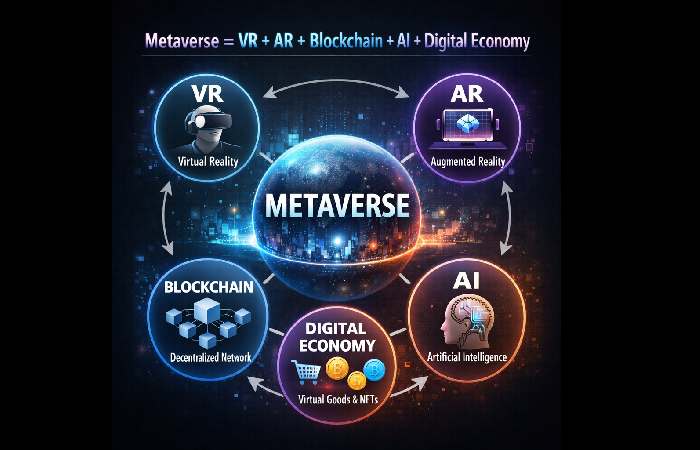
Modern metaverse platforms are built on multiple emerging technologies that work together to create immersive digital environments.
According to technology research, metaverse ecosystems combine extended reality (XR), artificial intelligence, blockchain networks, and digital economies to create persistent virtual worlds where users interact in real time.
Core Technologies Behind Metaverse Platforms
| Technology | Role in Metaverse | Example Use |
| Virtual Reality (VR) | Creates immersive 3D worlds | VR headsets |
| Augmented Reality (AR) | Blends digital objects with the real world | AR gaming |
| Blockchain | Ownership of assets | NFTs and virtual land |
| Artificial Intelligence | Smart avatars and automation | AI NPC characters |
| Spatial Computing | Interaction with digital environments | Apple Vision spatial tech |
| Cloud Computing | Supports massive virtual worlds | Multiplayer environments |
| Digital Twins | Virtual copy of real-world objects | Industrial simulations |
These technologies allow platforms to simulate environments where users can work, socialize, and conduct business.
Metaverse Platforms Meaning
The metaverse platforms meaning refers to digital ecosystems that allow users to interact within immersive 3D environments using avatars and virtual assets.
In simple terms, metaverse platforms are virtual worlds that combine:
- Social networking
- Online gaming
- Digital economies
- Virtual real estate
- Augmented and virtual reality
Unlike traditional websites, platforms are persistent environments where users can create content, build businesses, and interact with others in real time.
Key Characteristics of Metaverse Platforms
- Persistent virtual worlds
- Digital asset ownership
- User-generated content
- Virtual economies
- Real-time social interaction
- Cross-device accessibility
These features distinguish metaverse platforms from traditional gaming platforms.
Metaverse Platforms List (Major Virtual Ecosystems)
Below is a researched platforms list showing the major ecosystems shaping the digital world.
| Platform | Type | Key Feature | Users |
| Roblox | Gaming Metaverse | User-generated games | Millions |
| Decentraland | Blockchain Metaverse | Virtual land ownership | Web3 community |
| The Sandbox | Creator Metaverse | NFT gaming ecosystem | Creators & gamers |
| Horizon Worlds | Social Metaverse | VR social interaction | Meta ecosystem |
| Spatial | Professional Metaverse | NFT galleries & meetings | Designers |
| Fortnite | Entertainment Metaverse | Virtual concerts & events | Gamers |
| Nvidia Omniverse | Industrial Metaverse | Digital twin simulations | Engineers |
| Microsoft Mesh | Workplace Metaverse | Remote collaboration | Enterprises |
| Somnium Space | VR Metaverse | Full immersive environment | VR users |
| Upland | Real-world digital twin | Virtual property ownership | Investors |
Many of these platforms allow users to build experiences, sell digital items, and create virtual businesses.
Top 10 Metaverse Platforms in 2026
Here is a deeper analysis of the Top 10 metaverse platforms that dominate the ecosystem today.
| Rank | Platform | Category | Unique Advantage |
| 1 | Roblox | Gaming | Massive creator economy |
| 2 | Decentraland | Blockchain | DAO-governed digital land |
| 3 | The Sandbox | Web3 gaming | NFT marketplace |
| 4 | Horizon Worlds | Social VR | Meta ecosystem integration |
| 5 | Spatial | Professional | Virtual galleries & events |
| 6 | Nvidia Omniverse | Industrial | AI-powered digital twins |
| 7 | Microsoft Mesh | Enterprise | Workplace collaboration |
| 8 | Fortnite | Entertainment | Virtual concerts |
| 9 | Somnium Space | VR world | Realistic immersive VR |
| 10 | Upland | Digital real estate | Maps real world locations |
Platforms such as Decentraland and The Sandbox allow users to build digital businesses, own NFT assets, and monetize virtual land.
Top Metaverse Platforms Ecosystem Explained
A comparison infographic of Roblox vs Decentraland vs Sandbox vs Horizon Worlds
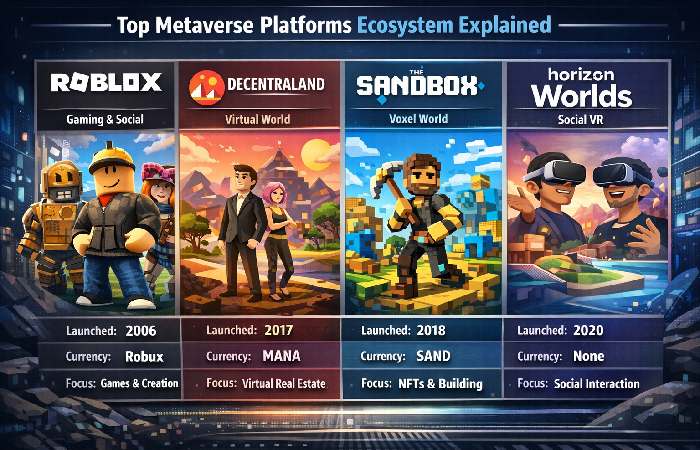
Platform Comparison Table
| Feature | Roblox | Decentraland | Sandbox | Horizon Worlds |
| Blockchain | No | Yes | Yes | No |
| Virtual Land | Limited | Yes | Yes | No |
| NFTs | No | Yes | Yes | No |
| User Generated Content | High | High | High | Medium |
| Creator Economy | Strong | Moderate | Strong | Growing |
| VR Support | Partial | Limited | Limited | Full |
This comparison highlights how different platforms serve different audiences.
Rise of Spatial Computing
One of the most important trends in it is the rise of spatial computing.
Spatial computing refers to technology that allows users to interact with digital environments using gestures, voice, and movement rather than traditional screens.
Companies investing heavily in spatial computing include:
- Apple
- Meta
- Microsoft
- Nvidia
Spatial Computing Ecosystem
| Company | Product | Role |
| Apple | Vision Pro | Spatial interface computing |
| Meta | Quest ecosystem | VR social platforms |
| Nvidia | Omniverse | Industrial metaverse |
| Microsoft | Mesh | Workplace collaboration |
These technologies will redefine how platforms operate in the next decade.
Growth of Metaverse Economy
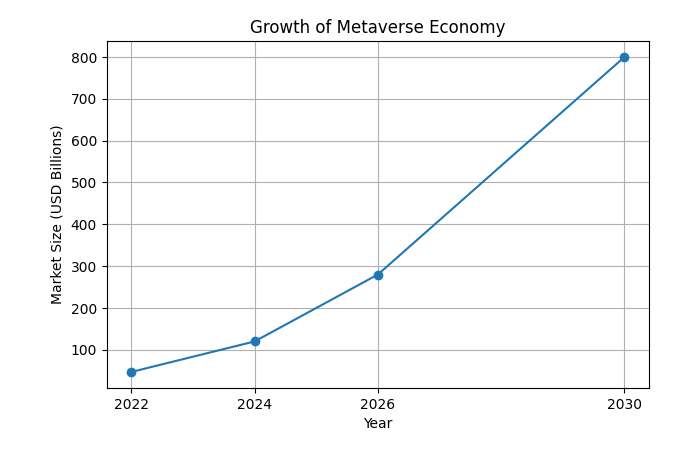
| Year | Market Size |
| 2022 | $47 Billion |
| 2024 | $120 Billion |
| 2026 | $280 Billion |
| 2030 (Projection) | $800 Billion |
How Businesses Use Metaverse Platforms
Businesses are increasingly adopting metaverse platforms for marketing, training, and remote collaboration.
Key Business Use Cases
- Virtual conferences
- Digital product launches
- Virtual real estate
- Remote team collaboration
- Virtual training simulations
Top Global Companies Using Metaverse Platforms
| Company | Industry | Metaverse Platform / Technology | How They Use It | Key Benefits |
| Meta | Social Media & Technology | Horizon Worlds | Social VR environments | Global digital communities |
| Microsoft | Enterprise Software | Microsoft Mesh | Virtual meetings | Remote collaboration |
| Nvidia | Semiconductor & AI | Omniverse | Digital twins | Product simulation |
| Roblox | Gaming | Roblox Platform | User-generated virtual worlds | Creator economy |
| Epic Games | Gaming | Fortnite | Virtual concerts | Entertainment experiences |
| Nike | Retail & Fashion | Nikeland | Virtual products | Brand engagement |
| BMW | Automotive | Nvidia Omniverse | Factory simulation | Manufacturing optimization |
| Accenture | Consulting | Nth Floor Metaverse | Employee training | Workforce development |
Business Benefits of Metaverse Platforms
| Benefit Category | Business Impact |
| Virtual Product Testing | Reduces manufacturing costs |
| Immersive Marketing | Higher customer engagement |
| Remote Collaboration | Global workforce connectivity |
| Virtual Training | Safe simulation environments |
| Digital Commerce | New revenue streams |
Industry Adoption of Metaverse Platforms
| Industry | Use Case |
| Education | Virtual classrooms |
| Gaming | Interactive experiences |
| Retail | Virtual stores |
| Real Estate | Digital property |
| Healthcare | Medical simulations |
| Manufacturing | Digital twins |
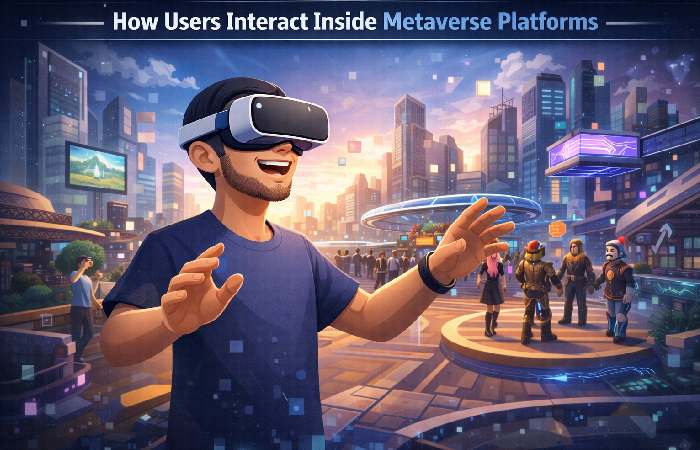
How Users Interact Inside Metaverse Platforms
Avatar interacting in a virtual city with VR headset.
Activities Inside Metaverse Platforms
| Activity | Description |
| Social Interaction | Meet people globally |
| Virtual Events | Concerts & conferences |
| NFT Trading | Buy and sell digital assets |
| Gaming | Interactive experiences |
| Education | Virtual learning environments |
| Virtual Commerce | Digital shopping |
Many modern platforms also support digital economies where users earn money by selling virtual goods.
Advantages of Metaverse Platforms
Key Benefits
- Global collaboration
- Immersive learning environments
- New digital economies
- Enhanced entertainment experiences
- Remote work transformation
These benefits explain why metaverse platforms are becoming the foundation of the next-generation internet.
Challenges Facing Metaverse Platforms
Despite rapid growth, several challenges remain.
| Challenge | Description |
| Privacy Risks | Data tracking in immersive worlds |
| Security Threats | Identity theft and hacking |
| Hardware Costs | VR devices are expensive |
| Interoperability | Platforms not connected |
| Regulation | Lack of legal frameworks |
Research also shows that security and privacy are major concerns in metaverse ecosystems because of their large digital attack surface.
Future of Metaverse Platforms
Experts believe the future of its platforms will include:
- AI-generated worlds
- Realistic avatars
- Fully immersive VR environments
- Interconnected metaverse ecosystems
- Digital economies worth trillions
Large technology companies continue to invest in virtual ecosystems, making its platforms a critical part of the future internet infrastructure.
Final thoughts
The Immersive Digital world is poised to disrupt how online users design websites and apps. Platforms in the metaverse are reinventing the way individuals work, communicate, and socialize online. The metaverse canvas is extending rapidly. From gaming platforms such as Roblox to corporate collaboration platforms such as Microsoft Mesh. The advanced technologies of blockchain, artificial intelligence, and spatial computing will add to the immersive, accessible, and economically lucrative metaverse. Understanding metaverse platforms.
